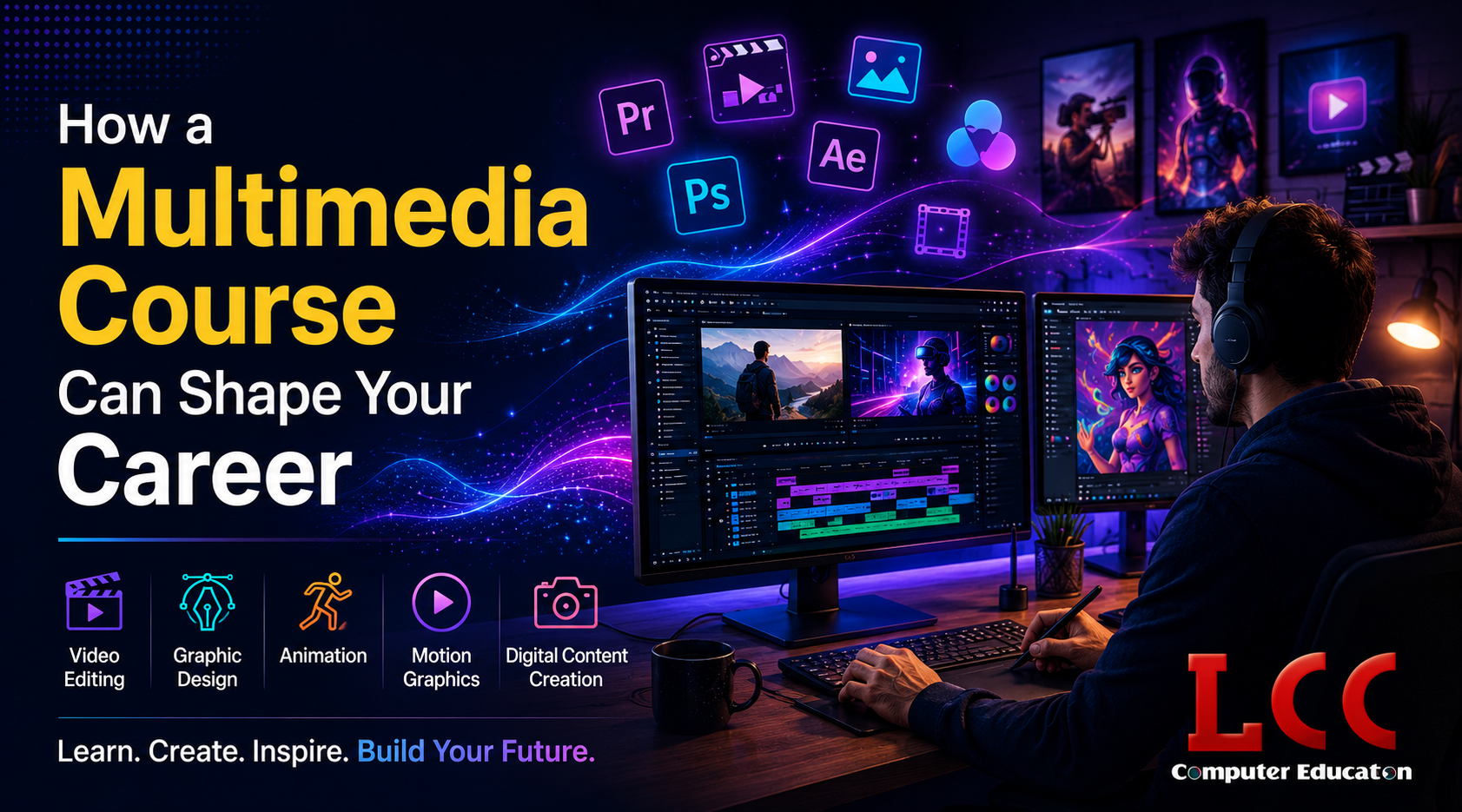
Let's be honest, not everyone grows up wanting to be an engineer, a doctor, or an accountant. Some of us were always a little different. You know the type, the one who loses an evening editing a video, scribbles ideas in a notebook, makes posters just because, or sits wondering how a bit of animation came together. If that sounds like you, multimedia is worth a proper look.
For a lot of students, a multimedia course is where all those scattered interests finally come together. The nice thing is it doesn't lock you into one skill. It cracks open a few doors at once and lets you work out where you naturally belong.
More Than Just Designing
There's this idea going around that multimedia is just about making graphics look pretty. It's not. The field is way bigger than that.
As soon as you begin your multimedia studies, you will encounter all sorts of digital content, such as:
- Graphic design
- Video editing
- Animation
- Motion graphics
- Visual storytelling
- Digital content creation
All that variety means you get to mess around in different creative disciplines before you ever pick a specialization. For most students, in fact, this exploring is the fun part.
Creativity Needs Direction
Pretty much everyone has ideas.The challenge, of course, is to do something with them!
You have a fantastic idea for an ad or video but don't know where to get started. That is where using proper learning is going to pay off.That's exactly where proper learning pays off. A solid multimedia and design course hands you the fundamentals behind good visual communication.
Layout, color combinations, typography, composition, knowing what keeps an audience watching, they sound like tiny things, but they quietly decide how people react to your work. Once that clicks, your projects start looking professional and like they mean something.
Learning Through Practice
Here's the bit that throws students off, just how hands-on multimedia really is.
You don't get better by reading about design. You get better by making things. Simple as that.
Every project hands you something new. One job sharpens your editing, the next pokes at your creativity or makes you solve a problem you've never seen. Over time, and without thinking too much about it, you begin to feel comfortable with:
- Creative thinking
- Software tools
- Visual communication
- Project execution
- Presentation skills
The growth kind of sneaks up on you. You won't notice it day to day, but a few months in you look back and you're making stuff you'd never have dreamed of on day one.
The Growing Demand for Creative Professionals
Just look around, multimedia is everywhere.
The clips on your feed, the animated ads, the YouTube videos, the visuals on websites, those big marketing campaigns, somebody skilled put every one together.
Businesses are throwing serious money at digital content, and the reason's simple: people react to visuals quicker than to plain text. So companies keep searching for folks who can make content that grabs attention. That's thrown the doors open for designers, editors, animators, and content creators in nearly every industry you can think of.
Exploring a Career in Animation and VFX
For a good few students, animation is the spark, the thing that got them curious about multimedia in the first place.
Films, games, ads, streaming shows, they all lean hard on visual effects and animation. A VFX and animation career lets you work where creativity and technology genuinely collide.
And there's something special about watching your own idea show up on screen. A short animation, a visual effect sequence, a motion graphic for some brand, it's tough work, but it gives back. Plus the field keeps shifting, so new openings pop up every year.
Why Industry Exposure Matters
Knowing the software counts for a lot. But getting how the industry actually works matters just as much.
Good multimedia professional training drags you out of those neat classroom exercises and into what real work demands. Meeting deadlines, taking feedback, building a portfolio, all of it shapes you and makes the leap from learning to working less scary.
And here's what people forget: employers nearly always open your portfolio before they read your resume. They want to see what you can make, not just what's on paper.
Starting Without Experience
Loads of people hang back because they're sure you need natural talent or a head start just to begin.
The truth? Every professional out there started with nothing.
A decent multimedia course for beginners kicks off at the very basics and builds you up bit by bit, one step at a time. You learn by doing, by watching, by repeating. Nobody nails something amazing on day one. The good stuff comes from showing up and refusing to quit.
Final Thoughts
A multimedia career isn't something you finish overnight. It builds up project by project, skill by skill, idea by idea.
What makes it worth it is how it lets creative people turn the stuff they love into something that matters. Whether you're into designing visuals, editing videos, creating animations, or digging into digital content creation, multimedia leaves you loads of room to find your own thing.
So if you love creating, and you want a career that never really stops changing, learning multimedia is honestly a great place to begin. Sometimes one course is all it takes to stumble onto a path you genuinely enjoy following.
